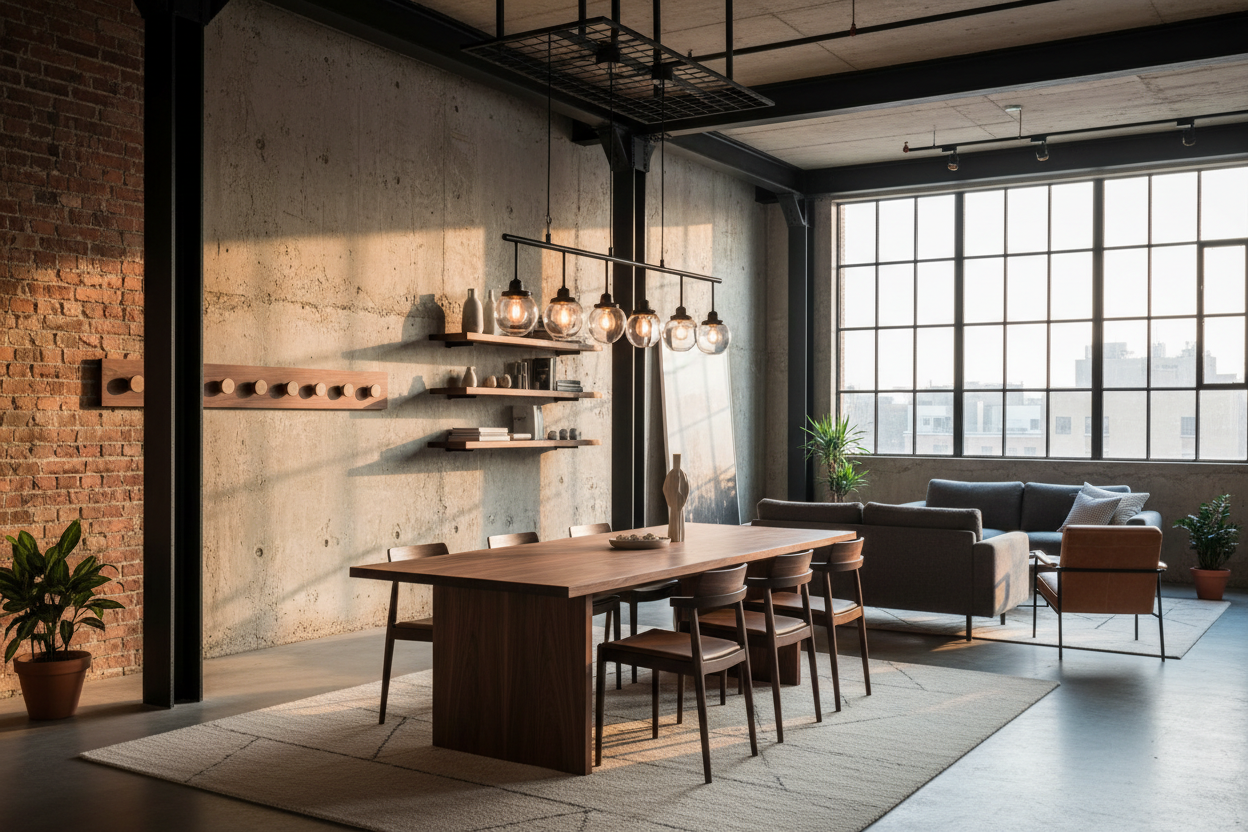
Industrial loft interior with exposed brick, concrete floors, and warm oak wooden furniture creating perfect material balance

Industrial Warmth: Blending Raw Materials with Natural Wood for Balanced Interiors

Softening Industrial Edge with Organic Elements

Industrial design is often associated with cold, hard materials—exposed brick, concrete, steel, and glass. While we explored the fundamentals in our Industrial Chic guide, there's an art to preventing industrial spaces from feeling stark or unwelcoming. At NOIR.DESIGN, we believe the key is introducing natural wood elements that add warmth without compromising the raw, authentic aesthetic that makes industrial design so compelling.

This isn't about diluting industrial style—it's about refining it. The most successful industrial interiors balance hard and soft, cold and warm, manufactured and natural. Our hardwood wall hooks, coat racks, and curtain holdbacks serve as the organic counterpoint to industrial materials, creating spaces that feel both edgy and inviting.

Understanding the Industrial-Organic Balance

Industrial design celebrates honest materials and functional forms. It emerged from repurposed factories and warehouses where structural elements—ductwork, beams, brick—became design features rather than elements to hide. This authenticity is industrial design's greatest strength, but it can also make spaces feel cold or institutional without careful balance.

The Problem with Pure Industrial: Spaces dominated entirely by metal, concrete, and glass can feel harsh, echo-prone, and emotionally cold. They lack the tactile warmth and organic variation that make spaces feel human and livable.

The Solution: Introducing natural materials—particularly wood—that share industrial design's honesty and functionality while adding warmth, texture, and acoustic softening. The key is choosing wood elements that complement rather than contradict the industrial aesthetic.

Why Hardwood Works in Industrial Spaces

Wood might seem antithetical to industrial design, but it's actually a perfect complement when chosen and used thoughtfully.

Shared Authenticity: Like exposed brick and steel beams, natural wood is honest about what it is. There's no pretense, no artificial finish trying to be something else. This authenticity aligns perfectly with industrial design principles.

Historical Precedent: Original industrial spaces—factories, warehouses, workshops—featured extensive wood elements. Hardwood floors absorbed impact, wooden workbenches provided durable work surfaces, and timber beams supported structures. Wood isn't foreign to industrial spaces; it's historically integral.

Material Contrast: Wood's warmth and organic texture create compelling contrast against cold metals and concrete. This juxtaposition highlights the unique qualities of each material—the wood feels warmer against steel, the steel feels more refined against wood.

Acoustic Benefits: Industrial spaces with hard surfaces create echo and reverberation. Wood absorbs sound, softening acoustics without requiring obvious sound-dampening treatments that would compromise the aesthetic.

Visual Warmth: Wood's natural tones—from pale ash to rich walnut—add colour warmth to spaces dominated by greys, blacks, and whites. This prevents the space from feeling monochromatic or sterile.

Choosing the Right Wood for Industrial Interiors

Not all wood works equally well in industrial contexts. The key is selecting species and finishes that complement rather than clash with industrial materials.

Best Wood Species for Industrial Spaces

Oak: Our most versatile choice for industrial interiors. Oak's bold grain and warm honey tones provide organic texture without being overly rustic. The prominent grain patterns create visual interest that holds its own against textured brick and concrete. Quarter sawn oak's ray fleck adds subtle shimmer that complements polished metal finishes.

Walnut: Perfect for sophisticated industrial spaces. Walnut's rich chocolate tones create dramatic contrast against white walls, concrete, and stainless steel. The fine grain is refined rather than rustic, aligning with the clean lines of industrial design. We use walnut when clients want warmth with an upscale, gallery-like feel.

Ash: Ideal for lighter, more Scandinavian-influenced industrial spaces (sometimes called "Scandi-dustrial"). Ash's pale tones and bold grain provide texture without darkening the space. It works beautifully with white-painted brick, light concrete, and brushed steel.

Reclaimed Wood: While we primarily work with new, sustainably sourced hardwoods, reclaimed wood has obvious appeal in industrial contexts. The weathered patina, nail holes, and saw marks tell stories that align with industrial design's appreciation for history and authenticity. When using reclaimed wood, ensure it's properly dried and stabilized to prevent movement.

Finishes That Work

Natural Oil Finishes: Our Osmo Hardwax Oil and Rubio Monocoat finishes are perfect for industrial spaces. They enhance wood's natural character without creating a glossy, furniture-like appearance. The matte to satin sheen feels authentic and unpretentious—exactly right for industrial aesthetics.

Avoid High-Gloss Finishes: Polyurethane and lacquer create a plastic-like sheen that feels too refined and traditional for industrial spaces. The glossy surface contradicts industrial design's raw, unpolished character.

Embrace Natural Aging: In industrial contexts, wood that develops patina over time is an asset. UV-induced darkening, minor scratches, and wear marks add character that enhances rather than detracts from the aesthetic. This aligns with industrial design's appreciation for materials that show their age honestly.

Strategic Placement of Wood Elements

The key to successful industrial-wood integration is strategic placement—using wood where it provides maximum impact without overwhelming the industrial character.

Entryways and Hallways

Wall Hooks: Our oak or walnut wall hooks provide the perfect first touch of warmth in industrial entryways. Mounted against exposed brick or concrete, they create immediate material contrast. The functional, minimalist design aligns with industrial aesthetics while the natural wood softens the space.

Coat Racks: A substantial hardwood coat rack makes a statement in industrial hallways. The vertical wood element breaks up expanses of brick or concrete while providing essential functionality. We recommend our oak and walnut two-tone designs for maximum visual impact against industrial backgrounds.

Oak shelving on black metal brackets

Flooring Transition: If your industrial space has polished concrete floors, consider wood flooring in the entryway. The material transition signals the shift from public to private space while adding warmth where guests first enter.

Living Spaces

Accent Walls: A single wall clad in horizontal wood planks creates a warm focal point in industrial living rooms. Keep the wood natural or lightly finished—avoid staining or painting, which would compromise the authentic material expression.

Shelving: Thick hardwood shelves on industrial metal brackets combine both materials beautifully. The wood provides warmth and organic texture while the metal brackets maintain industrial character. This is a classic industrial-organic pairing that works in virtually any space.

Furniture: A substantial wood dining table or coffee table anchors industrial living spaces. Choose pieces with clean lines and minimal ornamentation—the wood itself provides visual interest through grain and colour.

Bedrooms

Headboards: A simple wood plank headboard Industrial bedroom with wood headboardadds warmth to industrial bedrooms without compromising the aesthetic. Keep it minimal—thick planks with natural finish, no upholstery or ornate details.

Curtain Holdbacks: Our steam-bent hardwood curtain holdbacks add organic curves to industrial bedrooms dominated by straight lines and hard angles. The curved form provides visual relief while the natural wood adds warmth. They work beautifully against industrial-style metal curtain rods.

Bedside Elements: Wood bedside tables or wall-mounted wood shelves provide warm, tactile surfaces in spaces otherwise dominated by metal bed frames and concrete walls.

Bathrooms

Towel Rails: Our hardwood towel rails are perfect for industrial bathrooms. Mounted against subway tile or concrete, they provide essential warmth and organic texture. The wood's water-resistant finish (thanks to Osmo or Rubio) makes them practical as well as beautiful.

Industrial bathroom with walnut towel rail

Vanity Tops: Thick hardwood vanity tops create stunning contrast against concrete sinks or industrial-style metal basins. The wood adds warmth to what can otherwise be a cold, utilitarian space.

Mirror Frames: Simple wood-framed mirrors soften industrial bathrooms dominated by tile, metal, and glass. Keep frames minimal and rectilinear to maintain industrial character.

Colour Coordination in Industrial-Wood Spaces

Successful integration requires thoughtful colour coordination between wood tones and industrial materials.

With Exposed Brick

Red Brick: Warm-toned woods like oak and walnut complement red brick beautifully. The warm honey of oak or rich chocolate of walnut harmonizes with brick's terracotta tones, creating a cohesive warm palette.

White-Painted Brick: Any wood tone works with white brick, but we particularly love the contrast of dark walnut against white. The dramatic contrast creates visual impact while the wood prevents the white from feeling sterile.

Grey Brick: Cool-toned ash or light oak works beautifully with grey brick, creating a sophisticated, monochromatic palette with subtle warmth. For more contrast, dark walnut against grey brick creates a striking, contemporary look.

With Concrete

Raw Concrete: The cool grey of concrete pairs beautifully with any wood tone. Warm oak or walnut adds necessary warmth; pale ash creates a more Nordic, restrained palette. Our two-tone oak and walnut pieces work particularly well—the colour variation echoes concrete's natural tonal variation.

Polished Concrete: The refined surface of polished concrete calls for equally refined wood. We recommend our finely finished oak or walnut pieces with smooth, matte finishes that complement concrete's subtle sheen without competing with it.

With Metal

Black Steel: Any wood tone creates beautiful contrast against matte black steel. The juxtaposition of organic and industrial, warm and cool, is particularly striking. We love walnut against black steel for maximum drama.

Stainless Steel: The cool, reflective surface of stainless steel pairs well with warm-toned woods. Oak's honey tones or walnut's chocolate richness provide necessary warmth against steel's clinical coolness.

Brass or Copper: These warmer metals pair beautifully with walnut or darker oak. The warm metal tones and warm wood tones create a cohesive, sophisticated palette that feels upscale and intentional.

Proportion and Scale Considerations

The amount of wood you introduce matters as much as the type and placement.

The 20-30% Rule: In industrial spaces, wood should typically comprise 20-30% of visible surfaces. This provides sufficient warmth without diluting the industrial character. Too little wood and the space remains cold; too much and it loses its industrial edge.

Focal Points vs. Accents: Decide whether wood will be a focal point (large dining table, accent wall) or accent element (wall hooks, shelving, small furniture). Both approaches work, but mixing them requires careful balance to avoid visual confusion.

Vertical vs. Horizontal: Industrial spaces often emphasize horizontal lines (long shelves, low furniture). Introducing vertical wood elements—tall coat racks, vertical plank walls—creates visual variety and draws the eye upward, making spaces feel taller.

Texture Layering

One of industrial design's strengths is textural variety. Wood adds another layer to this textural richness.

Concrete, steel, and oak texture comparison

Smooth vs. Rough: Industrial spaces typically feature both smooth (polished concrete, glass) and rough (exposed brick, raw steel) textures. Wood can play either role—smooth, finely finished wood complements rough brick; rougher, more textured wood (like wire-brushed oak) complements smooth concrete.

Grain as Texture: Wood grain provides organic texture that contrasts beautifully with the geometric patterns of brick or the uniform surface of concrete. Oak's bold grain or ash's athletic grain patterns add visual interest without requiring actual surface texture.

Tactile Warmth: Beyond visual texture, wood provides tactile warmth. In spaces dominated by cold materials, touchable wood surfaces—door handles, coat hooks, chair arms—make the space feel more welcoming and human-scaled.

Lighting Considerations

Lighting dramatically affects how wood appears in industrial spaces.

Natural Light: Industrial spaces often feature large windows that flood the space with natural light. This highlights wood grain and colour beautifully, making it glow against darker industrial materials. Position wood elements where they'll catch natural light for maximum impact.

Industrial Lighting: Exposed bulb fixtures, metal pendant lights, and track lighting are industrial staples. These create dramatic shadows that emphasize wood grain texture. Consider how your lighting will interact with wood surfaces—raking light across wood grain creates beautiful depth.

Warm vs. Cool Bulbs: Industrial spaces often use cool-toned bulbs (4000-5000K) that emphasize the space's industrial character. However, these can make wood appear washed out or grey. Consider using warmer bulbs (2700-3000K) in areas with significant wood elements to enhance the wood's natural warmth.

NOIR.DESIGN Products for Industrial Spaces

Our collection is particularly well-suited to industrial-organic interiors:

Wall Hooks: Our minimalist oak and walnut wall hooks provide functional warmth in industrial entryways. The clean, curved forms align with industrial design's functional aesthetic while the natural wood adds necessary organic warmth. Mount them against exposed brick or concrete for maximum material contrast.

Coat Racks: Our substantial hardwood coat racks make statement pieces in industrial hallways. The two-tone oak and walnut designs create visual interest that holds its own against textured industrial backgrounds. The horizontal rails echo industrial design's emphasis on horizontal lines.

Curtain Holdbacks: Our steam-bent curtain holdbacks add organic curves to industrial spaces dominated by straight lines. The curved form provides visual relief while maintaining the functional, minimal aesthetic that industrial design demands.

Towel Rails: In industrial bathrooms, our hardwood towel rails provide essential warmth against tile, concrete, or metal surfaces. The simple, functional design aligns with industrial aesthetics while the natural wood prevents the space from feeling cold or institutional.

Signage: Our wooden signs with black text or graphics bridge industrial and organic aesthetics. The wood provides warmth; the bold, graphic text aligns with industrial design's straightforward communication style.

Common Mistakes to Avoid

Too Much Wood: Overwhelming industrial spaces with wood dilutes the industrial character. Maintain restraint—wood should accent and complement, not dominate.

Wrong Wood Style: Ornate, traditional wood furniture or heavily carved details contradict industrial design's minimalist, functional aesthetic. Choose clean-lined, simple wood pieces.

Mismatched Finishes: Glossy, traditional wood finishes feel out of place in industrial spaces. Stick with matte to satin oil finishes that feel authentic and unpretentious.

Ignoring Scale: Delicate, fine-scaled wood pieces get lost in industrial spaces with their high ceilings and substantial materials. Choose wood elements with sufficient visual weight to hold their own.

Forgetting Function: Industrial design celebrates functional objects. Purely decorative wood elements feel incongruous. Choose wood pieces that serve clear purposes—hooks for coats, shelves for storage, tables for dining.

Case Study: Balancing Industrial and Organic

Consider a typical industrial loft conversion: exposed brick walls, polished concrete floors, black steel windows, and white-painted ceiling with exposed ductwork.

The Challenge: The space feels impressive but cold, with harsh acoustics and an institutional vibe.

The Solution:

  • Large oak dining table (30% of floor space) provides warm focal point
  • Walnut wall hooks in entryway create warm first impression against brick
  • Oak and walnut coat rack in hallway adds vertical wood element
  • Thick oak shelves on black steel brackets in living area
  • Steam-bent curtain holdbacks add organic curves at windows
  • Wood bedside tables in bedroom provide tactile warmth

The Result: The space maintains its industrial character—the brick, concrete, and steel remain dominant—but feels warm, livable, and acoustically comfortable. The wood comprises approximately 25% of visible surfaces, providing balance without dilution.

Maintenance in Industrial Spaces

Industrial spaces present specific maintenance considerations for wood elements.

Dust Management: Industrial spaces with exposed ductwork and high ceilings can be dustier than conventional interiors. Regular dusting of wood surfaces maintains their appearance and prevents buildup that can dull the finish.

Humidity Control: Large industrial spaces can have humidity fluctuations that affect wood. Maintain 40-60% relative humidity to prevent excessive wood movement. Our properly finished pieces handle normal fluctuations well, but extreme conditions should be avoided.

Finish Refreshing: Every 1-2 years, apply a thin coat of Osmo or Rubio to refresh the finish. This maintains water resistance and enhances the wood's appearance.

Conclusion: The Best of Both Worlds

Industrial design's raw, honest aesthetic and natural wood's organic warmth aren't opposing forces—they're complementary elements that, when balanced thoughtfully, create spaces that are both edgy and inviting, contemporary and timeless.

At NOIR.DESIGN, we create hardwood pieces specifically suited to this balance. Our wall hooks, coat racks, curtain holdbacks, and towel rails provide the organic warmth that industrial spaces need without compromising their authentic, unpretentious character.

The key is restraint, intentionality, and respect for both materials. Let industrial elements dominate, but introduce wood strategically where it provides maximum warmth and impact. Choose wood species, finishes, and forms that align with industrial aesthetics rather than contradicting them. And embrace the honest expression of both materials—no pretense, no artifice, just authentic materials doing what they do best.

That's industrial warmth: the perfect marriage of raw and refined, hard and soft, manufactured and natural. It's where NOIR.DESIGN's hardwood craftsmanship meets industrial design's authentic aesthetic, creating spaces that feel both powerfully contemporary and warmly human.

Retour au blog

Laisser un commentaire

Curved Elegance: Showcasing Our Stunning Steam Bending Creations

Curated hardwood accessories selected by interior designers for refined residential and commercial spaces. This collection features our most versatile pieces that seamlessly integrate into contemporary, minimalist, and luxury interiors.

From wall-mounted hardware to desk accessories, each handcrafted piece in this collection has been chosen for its timeless design, premium materials, and ability to elevate any interior scheme. Crafted from European Ash, Oak, and American Black Walnut.